

Anemone is a genus
of about 120 species of flowering plants in the family Ranunculaceae, native to
the temperate zones. It is closely related to Pulsatilla and Hepatica; some botanists include both
of these genera within Anemone.
Anemone are perennials that
have basal leaves with long leaf-stems that can be upright or prostrate. Leaves
are simple or compound with lobed, parted, or undivided leaf blades. Source
Tag :// Anemone,
Tag :// Flower

Aquilegia is a genus of
about 60-70 species of perennial
plants that are found in meadows, woodlands, and at higher altitudes throughout
the Northern Hemisphere, known for the spurred petals of
their flowers. They are used as food plants by some Lepidoptera caterpillars. These are mainly of noctuid
moths noted for feeding on many poisonous plants without harm such as Cabbage
Moth. Source
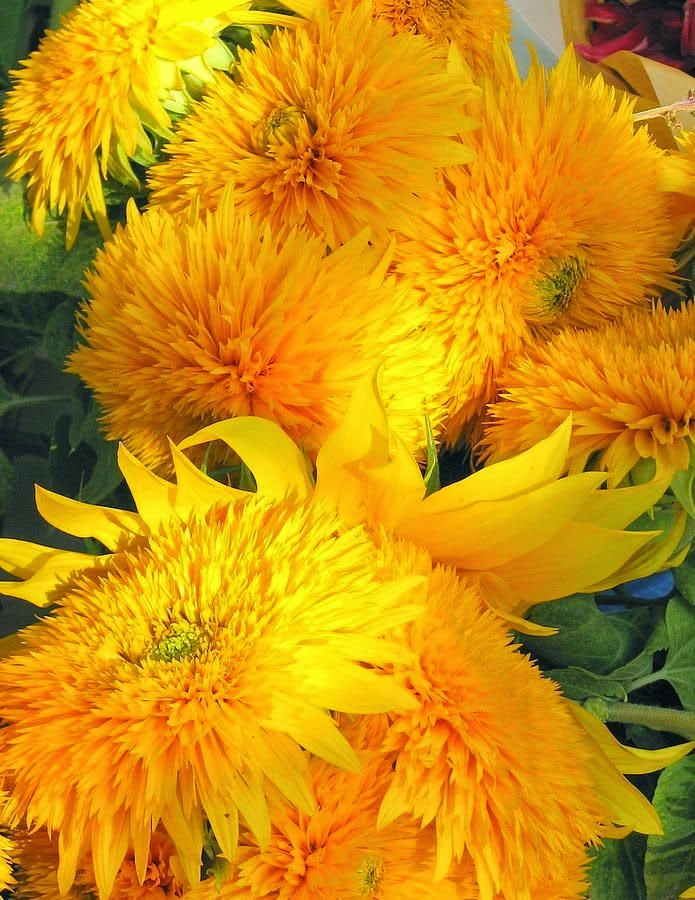
Helianthus (sunflower)
is a genus of plants comprising about 52 species in the Asteraceae family, all of which are
native to North America. There is quite a bit of variability among the
perennial species that make up the bulk of the species in the genus. Some have
most or all of the large leaves in a rosette at the base of the plant and
produce a flowering stem that has leaves that are reduced in size. Source

A poppy is a flowering
plant in the subfamily Papaveroideae of the family Papaveraceae. Poppies are herbaceous
annual, biennial or short-lived perennial plants. Some species are monocarpic,
dying after flowering. Poppies can be over 4 feet tall with flowers up to six
inches across. The flowers have 4 to 6 petals, many stamens forming a
conspicuous whorl in the centre of the flower. Source

The tulip to Europe is usually attributed to Ogier de
Busbecq, the ambassador of Ferdinand I, Holy Roman Emperor to the Sultan of
Turkey, who sent the first tulip bulbs and seeds to Vienna in 1554 from the Ottoman
Empire. Tulip bulbs were soon distributed from Vienna to Augsburg, Antwerp and Amsterdam.
The tulip was different from every other flower known to Europe at that time. Source

Eustoma, a genus of three species in the family Gentianaceae,
grows natively in warm regions of the Southern United States, Mexico, Caribbean
and northern South America. They are usually one to three feet tall, although
there are dwarf varieties that only grow up to eight inches in height. Lisianthus flowers are tricky to grow and require some
maintenance. They have tiny seeds that must be sown
on the surface. Source


